America’s Unfinished Business: Cold Cases, Forensic Breakthroughs, and the Unyielding Pursuit of Justice
Across the United States, law enforcement officers, forensic scientists, and grieving families continue to pursue truth in some of the most haunting criminal cases in modern history. From the shadowy riddles of the Zodiac Killer to the unsettling developments in the Gilgo Beach investigation, and from long-dormant cold cases revitalized by DNA technology to fresh legal twists in high-profile prosecutions, one theme remains constant: justice may be delayed, but it is not forgotten.
This week’s true crime developments underscore how modern science, renewed investigative focus, and old-fashioned police work are converging to crack mysteries that once seemed unsolvable.
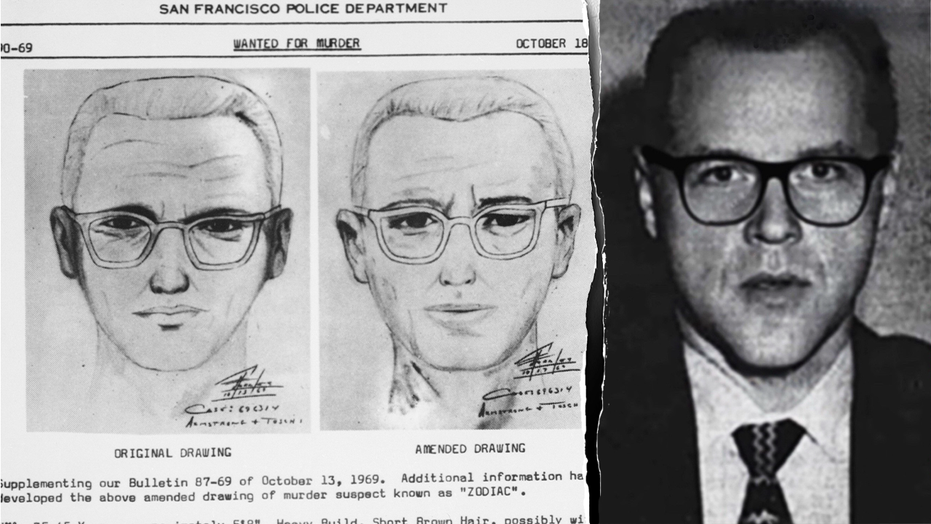
Zodiac Killer: New Code Claims Stir Old Fears
Few criminal cases have captured the American imagination like the Zodiac Killer. Operating in Northern California in the late 1960s and early 1970s, the unidentified murderer taunted authorities with cryptic letters and coded messages mailed to newspapers. The case remains open under the oversight of the Federal Bureau of Investigation and local California authorities.
Now, renewed claims suggest that a recently “cracked” code could potentially link the Zodiac to another infamous unsolved homicide — the 1947 murder of Elizabeth Short, known as the Black Dahlia. That brutal killing in Los Angeles remains one of the most notorious unsolved cases in American history, investigated by the Los Angeles Police Department’s Cold Case Unit.
While law enforcement has not confirmed any official link between the Zodiac case and the Black Dahlia murder, independent researchers continue to analyze cipher patterns and historical records. Experts caution that code-breaking claims often require rigorous peer review and forensic validation. Still, the public fascination is understandable. The possibility that two of America’s most infamous unsolved crimes could intersect would redefine 20th-century criminal history.
At stake is not just notoriety but historical accuracy — and justice for victims whose names deserve to be remembered beyond headlines.
Gilgo Beach: Inside the House of Horrors
The arrest of Rex Heuermann in connection with the Gilgo Beach serial killings shook Long Island and the nation. Authorities allege that he is responsible for multiple murders connected to remains discovered near Suffolk County Police Department search sites along the south shore of Long Island.
Now, new revelations have emerged from his ex-wife, who reportedly still resides in the Massapequa Park home where investigators believe several killings took place. The psychological toll of living in a location allegedly tied to such heinous acts cannot be overstated. According to public reporting, she has stated she is now living in the basement of the house while legal and logistical issues surrounding the property remain unsettled.
The Gilgo case illustrates a sobering truth: serial crimes often unfold in plain sight. For years, victims’ families demanded greater coordination between jurisdictions and more decisive investigative action. Today, advances in digital forensics and renewed interagency collaboration appear to have breathed new momentum into the probe.
This case remains under prosecution, and like all defendants in the American justice system, Heuermann is entitled to a presumption of innocence unless proven guilty in court.
Nancy Guthrie Case: DNA Science and the Clock of Justice
In another developing investigation, authorities are awaiting DNA test results in the Nancy Guthrie case. Experts say forensic analysis could take months, though certain circumstances may allow for expedited processing.
DNA evidence has revolutionized modern policing. Since the establishment of the Combined DNA Index System (CODIS) by the FBI, thousands of cold cases have been reopened and resolved. The process, however, is meticulous. Evidence must be carefully preserved, tested, verified, and legally vetted before conclusions are drawn.
Quick results make for splashy headlines. Accurate results deliver justice. And in cases involving violent crime, precision is paramount.
Idaho Murders: Legal Questions Around Key Evidence
The shocking 2022 murders of four University of Idaho students in Moscow, Idaho, stunned the country. The case, investigated by the Idaho State Police alongside local authorities, remains one of the most closely watched prosecutions in recent memory.
A forthcoming book reportedly claims that previously unseen evidence could complicate the prosecution’s case. Among the legal issues being debated: whether a knife sheath allegedly recovered at the crime scene may face admissibility challenges in court.
In America’s justice system, how evidence is obtained and handled can be just as important as the evidence itself. Defense attorneys frequently scrutinize chain of custody, search warrants, and forensic analysis methods. These constitutional safeguards, rooted in the Fourth and Fifth Amendments, protect every American from unlawful government overreach — even in emotionally charged cases.
The case underscores the balancing act between public demand for accountability and the procedural protections that define our republic.
Vanishing in Paradise: An American Missing in the Bahamas
The husband of an American woman who disappeared in the Bahamas has retained U.S.-based legal counsel after returning from the island nation. The case involves coordination with the Royal Bahamas Police Force, which is leading the local investigation.
International missing persons cases present unique challenges:
- Cross-border legal complexities
- Jurisdictional limitations
- Diplomatic coordination
- Differences in forensic standards
For families, uncertainty is agonizing. Legal representation can help ensure that investigative resources remain focused and that communication between nations remains transparent and consistent.
Cold Cases Cracked by Forensic Genealogy
One of the most transformative tools in American law enforcement is forensic genealogy — a technique that cross-references crime scene DNA with public genealogy databases to identify relatives of suspects. The method gained national attention during the capture of the Golden State Killer.
Agencies across the country, working within federal guidelines, are increasingly relying on this powerful technology. The National Institute of Justice outlines best practices for its ethical and effective use.
Recent cases highlight how decades-old murderers — once confident they had escaped accountability — are now being identified as serial predators or violent offenders. In several instances, elderly suspects have been arrested after living quietly for decades.
For victims’ families, even delayed justice brings long-awaited closure. For criminals, it sends an unmistakable message: time is no longer an ally.
Execution-Style Killings and Breakthrough Arrests
In another dramatic cold case breakthrough, authorities recently arrested a suspect tied to the execution-style killing of a married couple in front of a child. These crimes leave generational scars, imprinting trauma far beyond the immediate victims.
Law enforcement officials have credited advancements in forensic testing and renewed case reviews for solving cases that once languished in file cabinets. Many departments now maintain dedicated cold case squads, recognizing that unresolved homicides undermine community trust.
Justice, even when delayed by decades, reinforces the rule of law that defines the American experiment.
When Technology Speaks: Old Evidence, New Convictions
Other cases demonstrate the extraordinary power of preserved evidence. In some investigations, seemingly minor items — a glove, a towel, a shirt fiber — have become the threads that stitched together a prosecutable case decades later.
In yet another shocking example, DNA lifted from discarded chewing gum reportedly linked a suspect to a long-running pattern of sexual violence. These breakthroughs illustrate how small acts, once overlooked, can become decisive under modern laboratory scrutiny.
Institutions such as the National Aeronautics and Space Administration (NASA) may lead the world in scientific exploration, but forensic laboratories across America quietly carry out technological missions of a different kind — delivering earthly justice with microscopic precision.
Allegations of Domestic Betrayal and Betrayal of Trust
Not all cases involve strangers lurking in darkness. Some of the most devastating allegations stem from within the home. Reports of a Marine veteran allegedly gunned down by her husband outside their residence, and long-unsolved spousal murders now reexamined through new forensic techniques, underscore a harsh reality: betrayal often strikes closest to home.
In another case, prosecutors argue that a man accused in a cruise ship murder should not be free pending trial, citing concerns about public safety. Judges must weigh prosecutorial arguments against constitutional rights — a delicate balance rooted in centuries of Anglo-American legal tradition.
NASA Engineer’s Mysterious Death Raises Questions
The death of a NASA nuclear engineer found inside a burned Tesla after vanishing from his Alabama home has also captured national attention. Cases involving highly skilled professionals often produce widespread speculation, but investigators must methodically separate rumor from evidence.
High-profile victims can intensify media focus, yet law enforcement’s responsibility remains consistent: gather facts, verify evidence, and pursue charges only when legally justified.
The Bigger Picture: America’s Relentless Quest for Justice
What ties these diverse cases together?
- The growing role of DNA and forensic innovation
- Renewed political and public support for cold case units
- Victims’ families refusing to let memories fade
- The enduring strength of constitutional due process
Across red states and blue states alike, sheriffs, local detectives, federal agents, and forensic analysts are demonstrating that American justice does not expire. Cold cases are no longer cold forever. Killers who once relied on investigative limitations now face a technological landscape that grows more precise each year.
At the same time, our legal system remains anchored in safeguards that distinguish the United States from authoritarian regimes. Presumption of innocence, rules of evidence, and transparent trials protect the rights of the accused while honoring the dignity of victims.
Justice in America is not driven by vengeance. It is driven by truth, evidence, and the rule of law.
A Nation That Remembers
The American people have long memories when it comes to violent crime. From the Zodiac’s ciphers to Gilgo Beach’s burial grounds, from college campus murders to vanished spouses abroad, these stories persist because they matter.
They matter to families who have waited years for answers. They matter to communities seeking safety. And they matter to a nation founded on the principle that law, not chaos, governs free people.
As forensic science advances and investigative resolve strengthens, the message is clear: in the United States of America, justice may move deliberately — but it moves forward.
And for those who believe they have gotten away with murder, the warning is simple and unmistakable:
America is still watching.